American Apple Pie Recipe Classic Homemade Dessert – TheHomeMenus
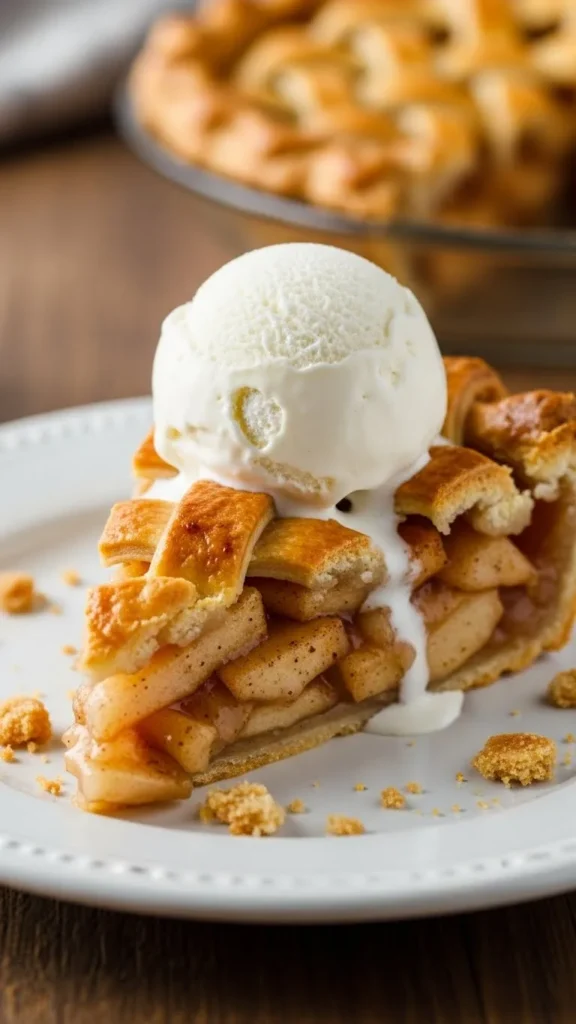
American apple pie isn’t just dessert, it’s a whole mood. It smells like comfort, tastes like tradition, and somehow makes any table feel more welcoming. I make this pie when I want something familiar that still feels special every single time. Ever notice how apple pie never needs an introduction?
Why American Apple Pie Holds Legendary Status
American apple pie earned its reputation honestly. It balances flavor, texture, and nostalgia in a way few desserts manage. The apples stay front and center while sugar and spice support them quietly. That balance keeps it timeless.I love how this pie feels both casual and important. You can serve it at a holiday dinner or a random Sunday meal, and it never feels out of place. That versatility explains the hype.
- Balanced sweetness and spice
- Flaky, buttery crust
- Familiar flavor that never feels boring
What Makes It Different from Other Apple Pies
American apple pie focuses on structure and clarity. The filling stays thick, not soupy, and the apples keep their shape. The spice profile stays warm but restrained. Nothing overpowers the fruit. Compared to heavily spiced or ultra-sweet versions, this one feels cleaner. You taste apples first, then everything else falls into line.
- Apples remain the star
- Moderate sweetness
- Clean, comforting flavor profile
Choosing Apples the American Way
Most American apple pies rely on a blend of apples. Mixing varieties creates better texture and flavor depth. One apple brings tartness, another brings sweetness, and together they behave beautifully. I usually mix tart and sweet apples because it keeps the filling from tasting flat. Ever had apple pie that tasted dull? Apple choice caused that.
- Granny Smith for tartness and structure
- Honeycrisp for sweetness and juiciness
- Fuji or Braeburn for balance
Ingredients That Keep It Classic

American apple pie sticks to pantry staples for a reason. Each ingredient earns its place, and skipping one shows quickly. This recipe doesn’t hide mistakes behind heavy flavoring. I trust simple ingredients here because they’ve proven themselves over decades. Fancy extras only distract.
- Fresh apples, peeled and sliced
- Granulated sugar and brown sugar
- Cinnamon and nutmeg
- Lemon juice for brightness
- Flour or cornstarch for thickening
- Unsalted butter
- Salt
- Double pie crust
The Crust: A Non-Negotiable Star
A proper American apple pie crust feels flaky, tender, and sturdy. It supports the filling without stealing attention. Homemade crust delivers the best texture, but store-bought works if handled well. Cold dough matters more than anything. Warm butter ruins flakiness fast. Keep everything chilled and calm.
- Keep butter and dough cold
- Avoid overworking the dough
- Chill before and after shaping
Preparing the Apple Filling Correctly
I toss apple slices with sugars, spices, lemon juice, and thickener in a large bowl. I mix gently so the apples stay intact. Letting the filling rest helps release juices and improves thickening later. This rest time prevents watery filling. Skipping it usually leads to regret.
- Slice apples evenly
- Toss gently to coat
- Let filling rest before assembling
Getting the Sweetness Just Right
American apple pie shouldn’t taste like candy. The apples should shine with natural sweetness supported by sugar. I always taste the filling before baking and adjust slightly. Different apples behave differently, so flexibility matters. Trust your palate.
- Balance white and brown sugar
- Adjust based on apple sweetness
- Taste before assembling
Assembling the Pie Without Stress
I roll out the bottom crust and ease it into the pie dish without stretching. Stretching causes shrinkage later. Then I pile in the apples, mounding slightly in the center. Apples shrink as they bake, so height matters. I dot butter over the filling because butter improves everything.
- Ease crust gently into dish
- Mound filling slightly
- Dot butter evenly
Top Crust Styles That Work Best
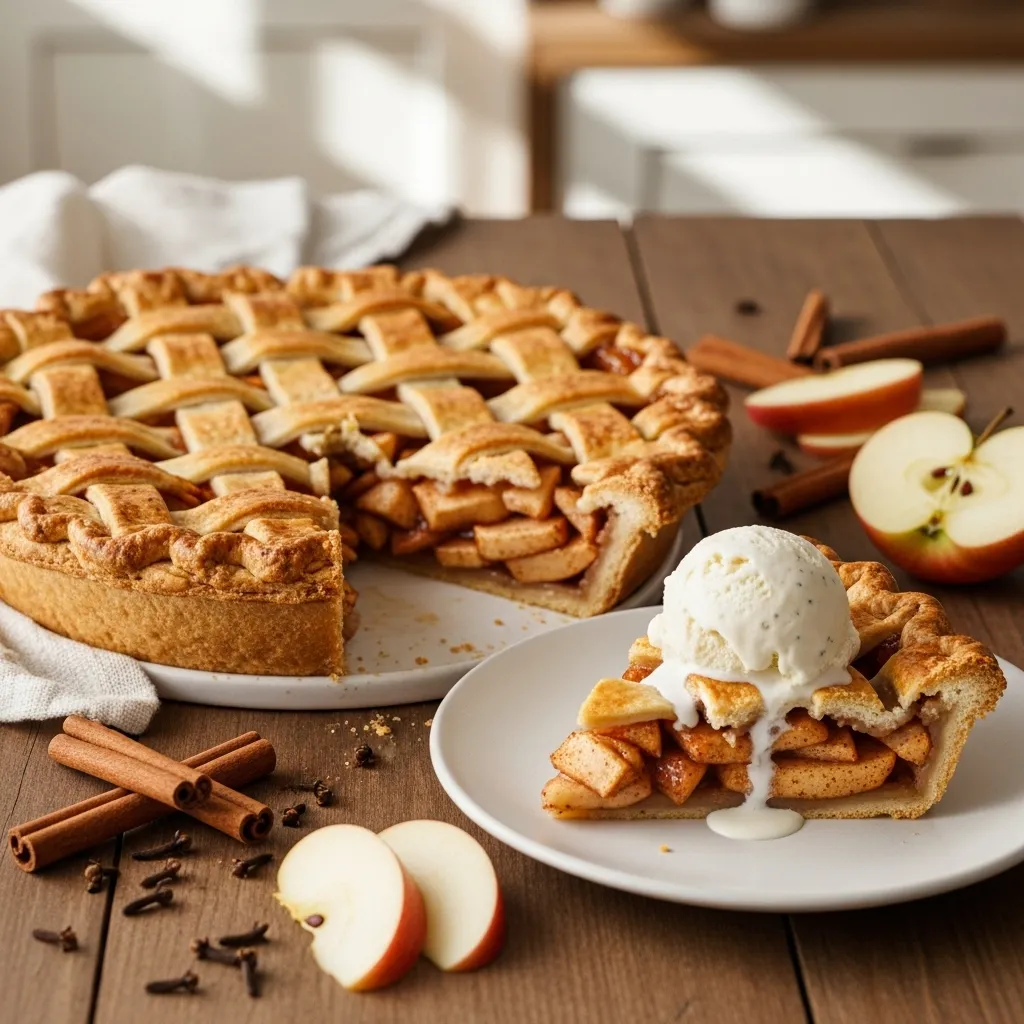
American apple pie usually wears a full top crust or a lattice. Full crust traps moisture and feels classic. Lattice allows steam to escape and adds visual appeal. Both work beautifully. I choose based on mood, not rules.
- Full crust with steam slits
- Lattice crust for classic look
- Secure edges firmly
Finishing Touches That Matter
I crimp the edges firmly to seal the pie. Then I brush the top with egg wash and sprinkle sugar lightly. These steps improve color, texture, and presentation. They take seconds but change the final look dramatically.
- Crimp edges securely
- Brush with egg wash
- Sprinkle sugar for crunch
Baking the Pie the American Way
I start baking at a higher temperature to set the crust quickly. Then I lower the heat to cook the filling evenly. Shielding the edges prevents burning while the center finishes. The pie tells you it’s done when thick juices bubble through the vents. No bubbles means no finish.
- Start hot, then reduce heat
- Shield edges if needed
- Look for bubbling juices
Cooling Time Is Part of the Recipe
Cooling matters just as much as baking. Cutting too early turns the filling into soup. Cooling allows the thickener to set properly. I wait at least two hours, even though it feels unfair. The result rewards patience.
- Cool completely before slicing
- Avoid rushing this step
- Use a sharp knife
Texture and Flavor Expectations
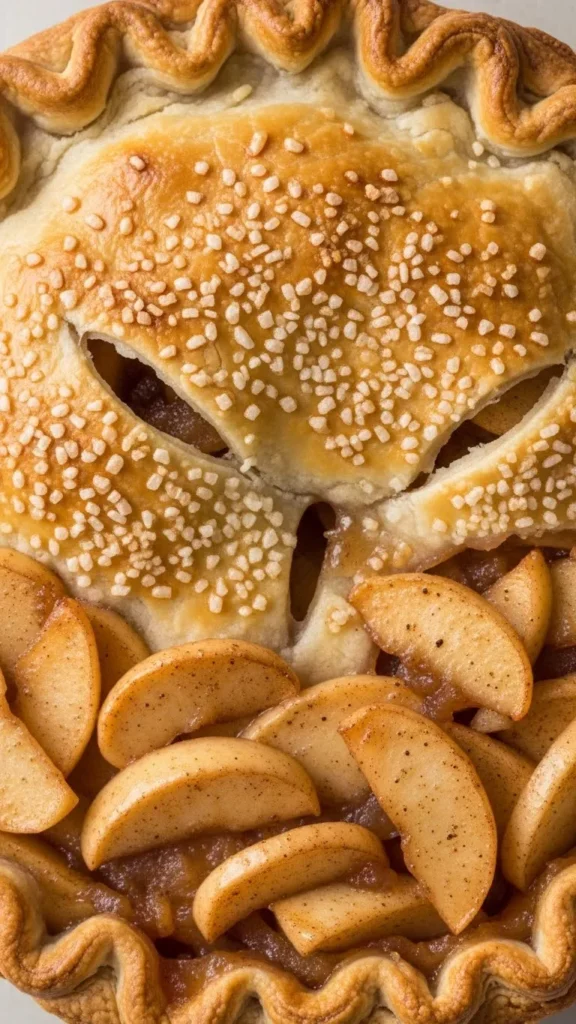
American apple pie should feel tender but structured. The apples hold shape while yielding easily. The filling feels thick, glossy, and juicy without running. Each bite should feel warm, balanced, and comforting. Nothing should overpower.
- Tender apples with bite
- Thick, cohesive filling
- Flaky but sturdy crust
Common American Apple Pie Mistakes
Most mistakes come from impatience or shortcuts. Undercooked filling, soggy crust, and bland flavor all trace back to skipped steps. This pie rewards attention. I learned these lessons the hard way, so you don’t have to.
- Cutting too early
- Using only one apple type
- Skipping filling rest time
Storage the Right Way
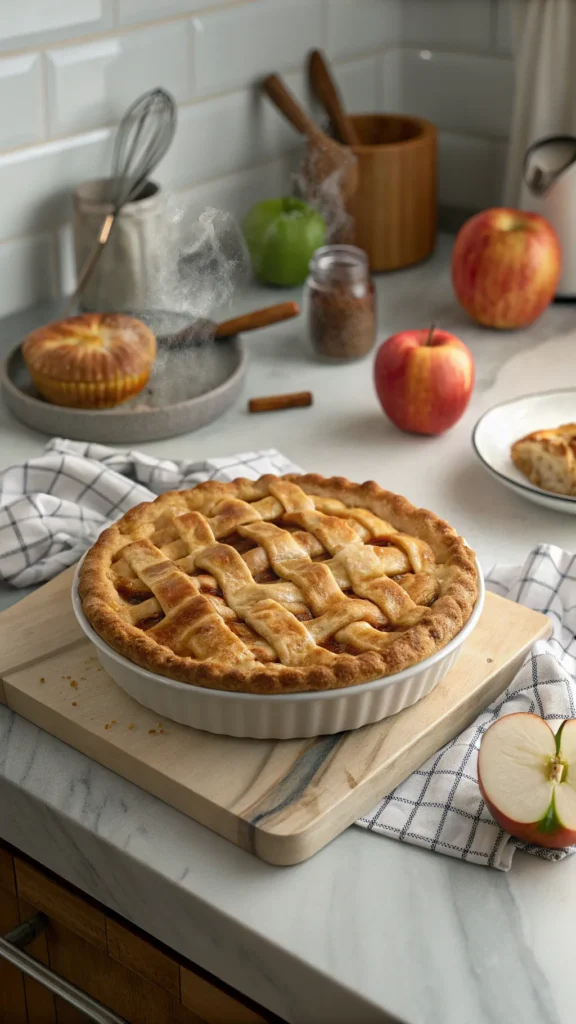
American apple pie stores well when handled properly. I keep it loosely covered at room temperature for a day or two. Refrigeration extends freshness, but reheating improves texture. Warm apple pie tastes correct. Cold pie feels unfinished, IMO.
- Room temperature for short storage
- Refrigerate after two days
- Reheat before serving
Who This Pie Is Perfect For
American apple pie fits nearly every occasion. Holidays, family dinners, potlucks, and quiet weekends all benefit from it. It feels nostalgic without feeling outdated. If you want a dessert that brings people together without trying too hard, this is it.
- Holiday gatherings
- Family meals
- Comfort baking days
Conclusion
American apple pie stays iconic because it works. It delivers comfort, balance, and familiarity without shortcuts or trends. Each slice feels intentional and reassuring. Bake it once, and it quietly earns a permanent place in your rotation. Some classics don’t need improvement, and this pie proves that every time.