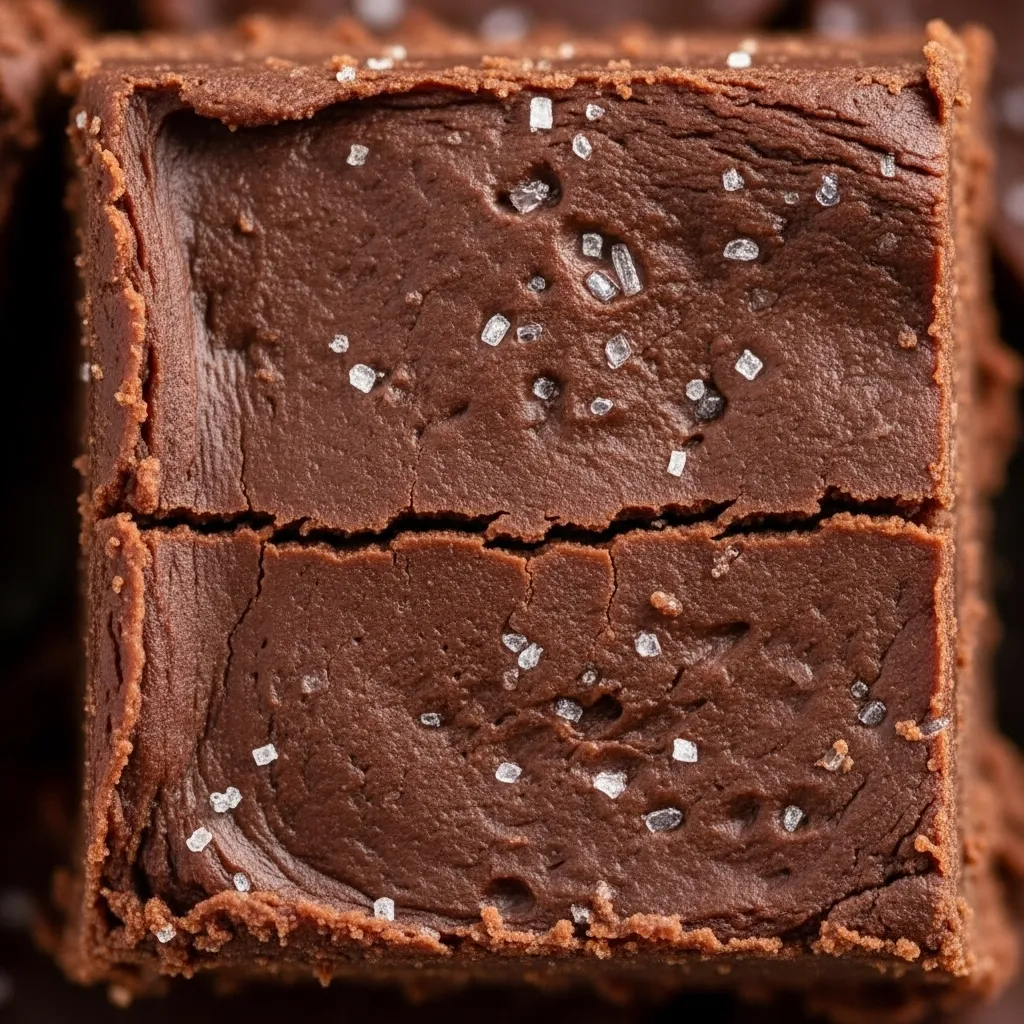
Chocolate Fudge
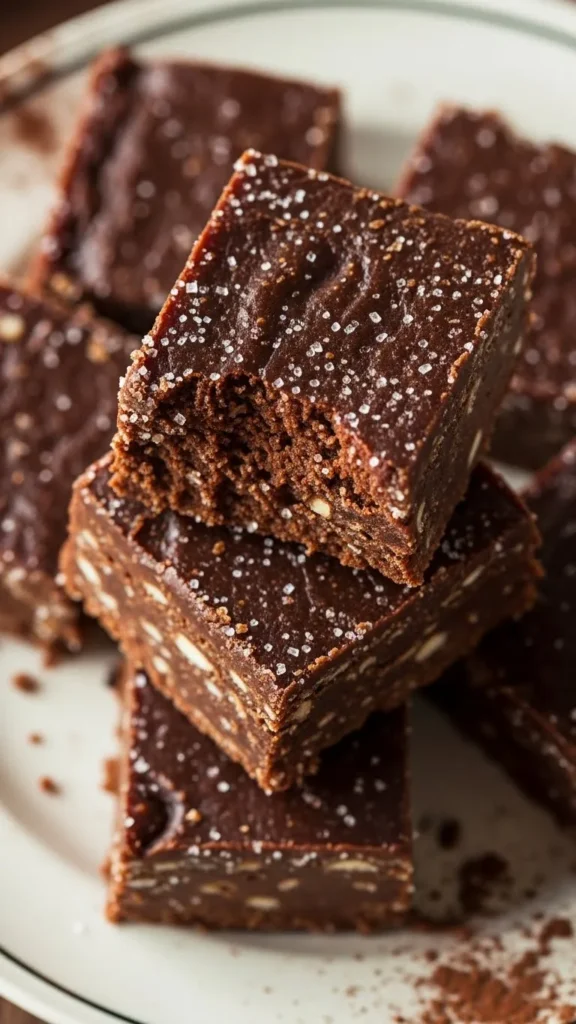
Chocolate fudge is one of those desserts that looks innocent but knows exactly what it’s doing. One small square turns into three before you even register what happened. I’ve made a lot of desserts over the years, but fudge always feels like the fastest way to pure chocolate satisfaction. No oven drama, no fancy steps, just rich, smooth goodness. This is the kind of treat that lives between candy and dessert. It feels indulgent, comforting, and dangerously easy to keep eating. Ever told yourself “just one piece” and immediately laughed at that idea? Same.
Why Chocolate Fudge Never Goes Out of Style
Trends change, but chocolate fudge stays undefeated. It doesn’t rely on presentation or layers to impress. It wins purely on texture and flavor, which feels refreshing. I love how fudge fits every situation. Holidays, gifts, midnight cravings, or stress-eating after a long day, it always works. Few desserts pull that off so effortlessly.
What Makes Fudge So Addictive
Fudge hits a unique sweet spot. It melts slowly, coats your mouth, and delivers deep chocolate flavor without crunch or crumb. That smoothness keeps you coming back.
Texture Goals: Smooth, Dense, and Creamy

Good chocolate fudge feels firm but soft. It slices cleanly but melts once it hits your mouth. If it crumbles or feels grainy, something went wrong. I judge fudge fast by texture alone. If it feels gritty, I lose interest immediately. Smooth texture separates great fudge from disappointing candy.
How Fudge Differs from Brownies or Cake
Brownies feel chewy and baked. Cake feels airy and fluffy. Fudge feels dense and creamy, almost like a solid chocolate cloud. You don’t chew fudge the same way. You let it melt, and that’s where the magic happens.
Ingredients That Do the Heavy Lifting
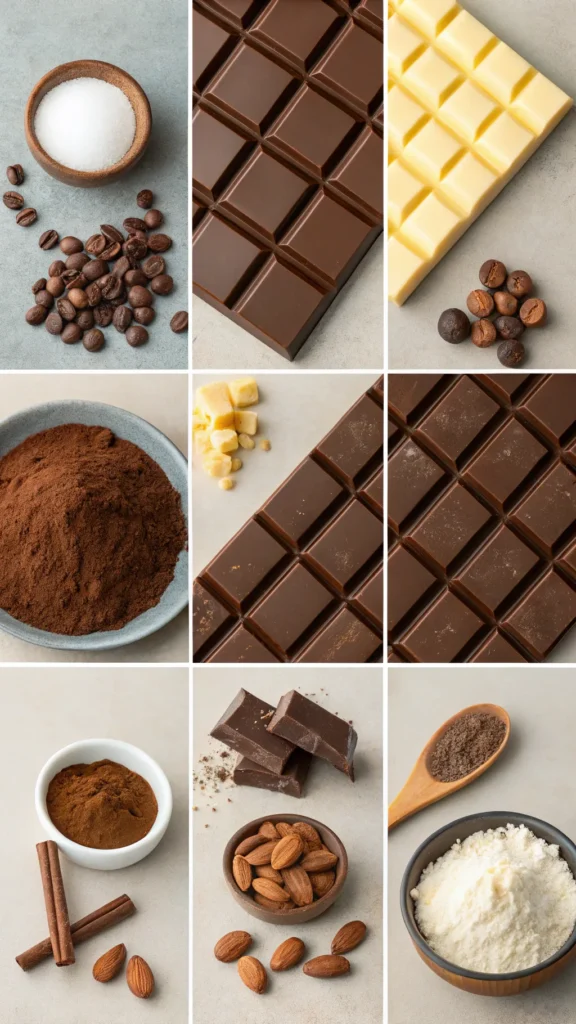
Chocolate fudge uses very few ingredients, which means quality matters a lot. There’s nowhere to hide mistakes. Every ingredient shows up clearly in the final result. I’ve ruined fudge by cutting corners, and I won’t do that again. This dessert rewards respect.
Core Ingredients You’ll Need
- Chocolate for flavor and structure
- Sweetened condensed milk or sugar for sweetness and body
- Butter for smoothness and richness
- Cocoa powder for deeper chocolate notes
- Vanilla extract to enhance flavor
- Salt to balance sweetness
Chocolate Choice Can Make or Break Fudge
Chocolate defines everything here. I usually go with semi-sweet or dark chocolate because it balances sweetness best. Milk chocolate can work, but it turns very sweet fast. Low-quality chocolate ruins fudge immediately. Ever tasted fudge that felt waxy? That wasn’t bad luck, it was bad chocolate.
Tips for Choosing the Right Chocolate
- Use real chocolate bars, not candy coating
- Avoid overly sweet chocolate
- Taste before melting
- Check ingredient lists for cocoa butter
Cooking Temperature Matters More Than You Think
Fudge doesn’t like being rushed or overheated. High heat causes grainy texture, and once that happens, there’s no fixing it. I learned that lesson the hard way. Low and steady heat keeps everything smooth. Patience matters more than speed here.
How to Avoid Grainy Fudge
- Use low heat only
- Stir gently, not aggressively
- Don’t overcook the mixture
- Remove from heat as soon as smooth
Mix-Ins: Optional but Dangerous
Classic chocolate fudge stands perfectly on its own. That said, mix-ins can turn it into something special. I use them carefully because they add texture and distraction. Too many mix-ins ruin the smooth experience. Moderation wins here.
Popular Mix-Ins That Actually Work
- Chopped nuts for crunch
- Swirls of peanut butter for contrast
- Sea salt flakes on top
- White chocolate drizzle for visual pop
Setting and Cooling: Don’t Rush This Part
Once poured into the pan, fudge needs time to set. Moving it too early messes with texture and shape. I always let it cool completely before slicing. Refrigeration helps speed things up, but patience still matters. Warm fudge won’t hold clean edges.
Why Cooling Time Matters
- Structure firms up
- Texture smooths out
- Flavors balance
- Slices become clean
Serving Chocolate Fudge
Chocolate fudge doesn’t need fancy plating. Small squares work best because it’s rich. I usually serve it straight from the fridge or at room temperature, depending on mood. It pairs beautifully with coffee or tea. That bitterness balances sweetness perfectly.
Best Ways to Serve It
- Plain squares for full flavor
- With coffee or espresso
- Alongside cookies or brownies
- As part of dessert trays
Storage Tips to Keep It Perfect
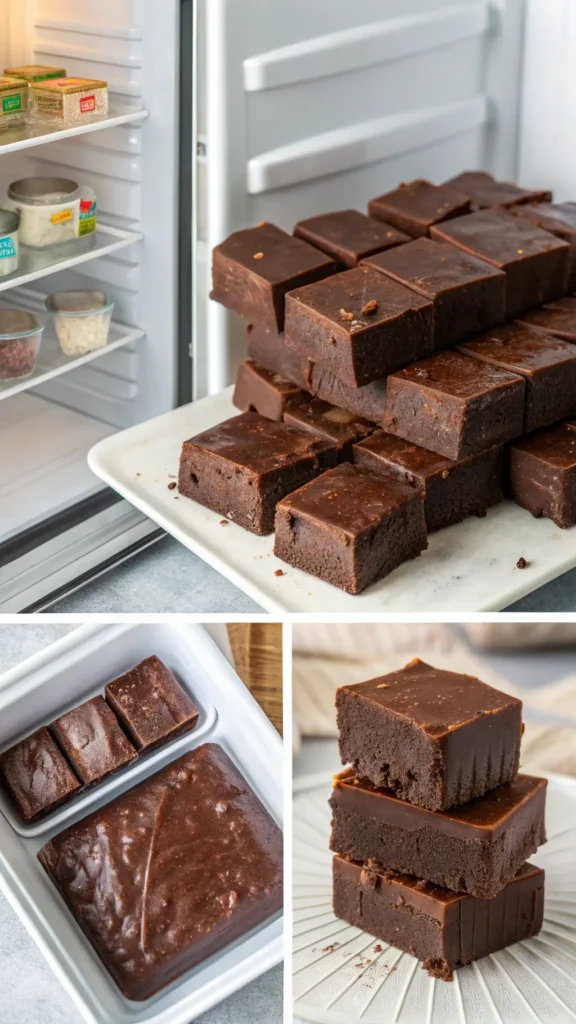
Fudge stores extremely well, which makes it great for gifting or prepping ahead. Proper storage keeps texture smooth and flavor fresh. I usually make a batch and enjoy it slowly. In theory.
How to Store Chocolate Fudge
- Room temperature: 3–4 days, airtight
- Refrigerator: Up to 2 weeks
- Freezer: Up to 3 months, wrapped well
Pro tip: let refrigerated fudge sit for a few minutes before eating. Cold dulls flavor slightly.
Common Mistakes to Avoid
Fudge seems simple, but small mistakes show up fast. Most issues come from heat control and impatience. Details matter more than effort here. Once you respect the process, results stay consistent.
Things That Can Go Wrong
- Overheating chocolate, causing graininess
- Low-quality chocolate, ruining flavor
- Rushing cooling time, ruining texture
- Skipping salt, flattening taste
Why Chocolate Fudge Always Wins
Chocolate fudge delivers instant comfort. It feels nostalgic, rich, and satisfying without effort. People rarely stop at one piece, and leftovers disappear quietly. I’ve gifted fudge many times, and it always gets requested again. That feels like the highest compliment.
Who Chocolate Fudge Is Perfect For
- Chocolate lovers
- Holiday gifting
- No-bake dessert fans
- Crowd-pleasing treats
Final Thoughts
Chocolate fudge proves that simplicity can still feel luxurious. With the right chocolate, gentle heat, and a little patience, it delivers smooth, rich perfection every time. No oven, no stress, no complicated steps. If you want a dessert that feels comforting, indulgent, and impossible to ignore, chocolate fudge deserves a permanent place in your recipe rotation. Just don’t blame me when “one piece” turns into four.