Orange Upside Down Cake
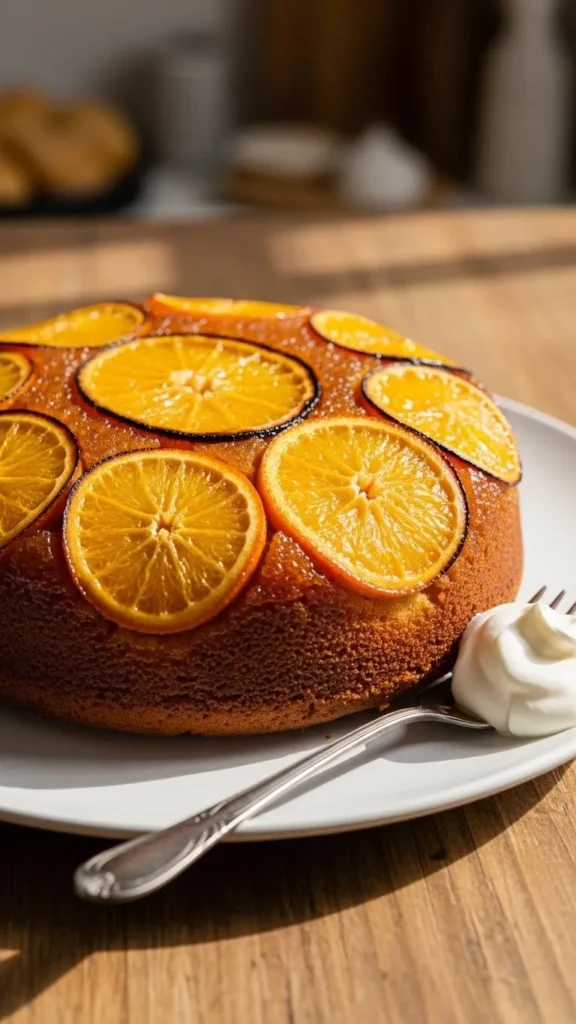
Orange upside down cake feels like a little bit of drama in dessert form, but in a good way. You flip it, hold your breath for a second, and boom, caramelized oranges shining on top like they planned it all along. I love this cake because it looks impressive without actually being complicated, which honestly feels like cheating in the best possible way. It’s warm, citrusy, and just sweet enough to keep you going back for another slice. This cake brings together soft crumb and sticky fruit topping, and that contrast is exactly why it works so well.
What Makes an Upside Down Cake Special
An upside down cake bakes with the topping at the bottom of the pan and gets flipped after baking. Sounds simple, but the result feels fancy. The fruit caramelizes in butter and sugar, creating a glossy topping that also flavors the cake underneath. In this version, oranges take center stage. They hold their shape beautifully and turn slightly jammy once baked, which feels like a win every time.
Flavor Profile You Can Expect
Orange upside down cake tastes bright, warm, and lightly caramelized. The oranges bring freshness, while the sugar and butter add richness. The cake underneath stays soft and mildly sweet so it doesn’t compete with the topping. Each bite gives you citrus, caramel, and tender cake all at once. It feels balanced rather than sugary or heavy.
Texture That Makes This Cake Stand Out
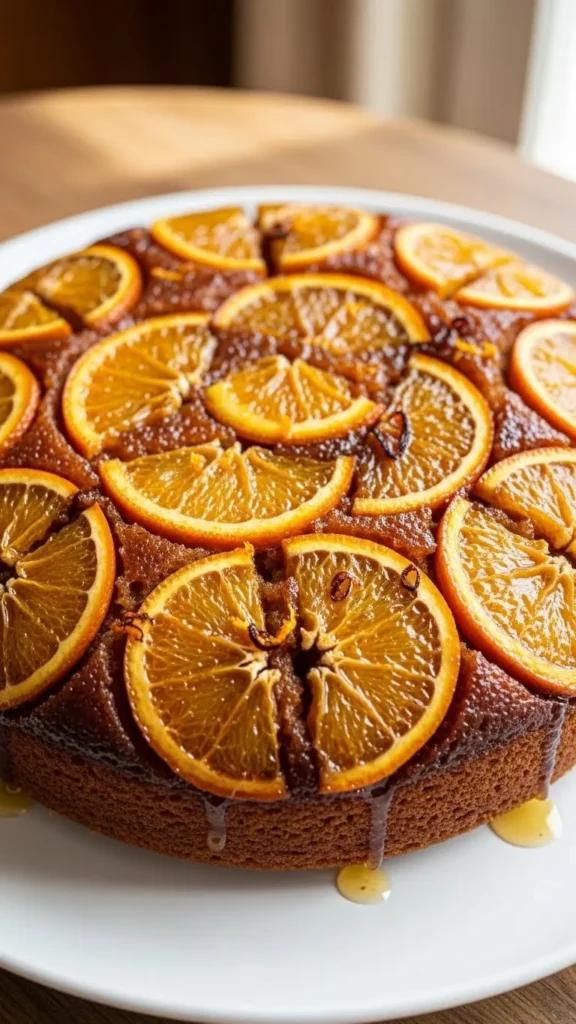
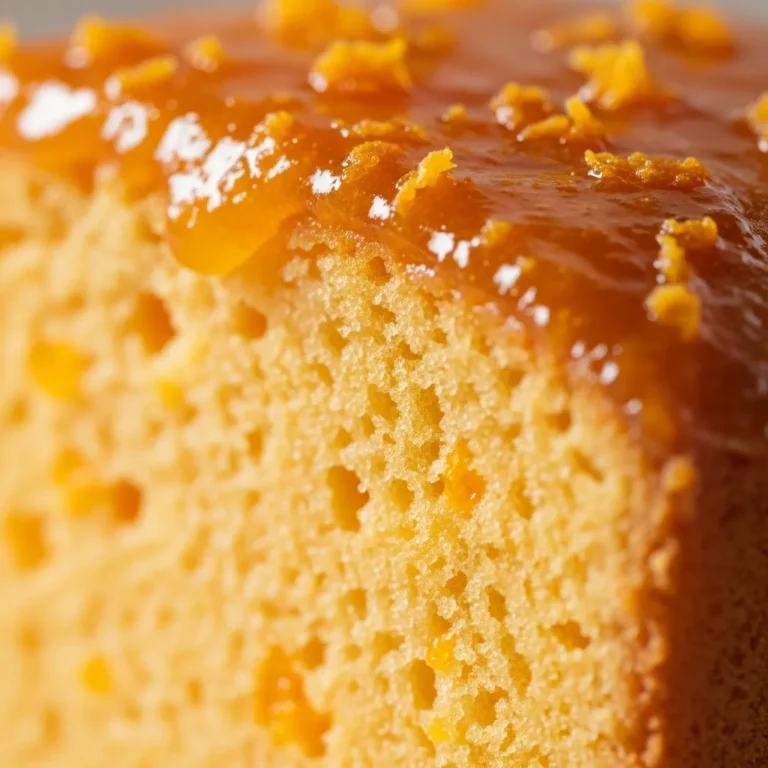
The top layer feels sticky and juicy from the caramelized oranges. Underneath, the cake stays moist and fluffy, soaking up some of that orange syrup as it bakes. That contrast keeps the cake interesting from first bite to last. The crumb holds together well, which makes slicing clean and serving easy. No falling-apart mess here.
Why Oranges Work So Well in This Cake
Oranges have just enough acidity to balance the caramel topping. They don’t collapse like softer fruits, and they keep their shape even after baking. The zest and juice also add flavor to the cake batter itself. Using oranges makes the cake feel fresh instead of overly sweet. That citrus edge keeps everything lively.
Choosing the Right Oranges
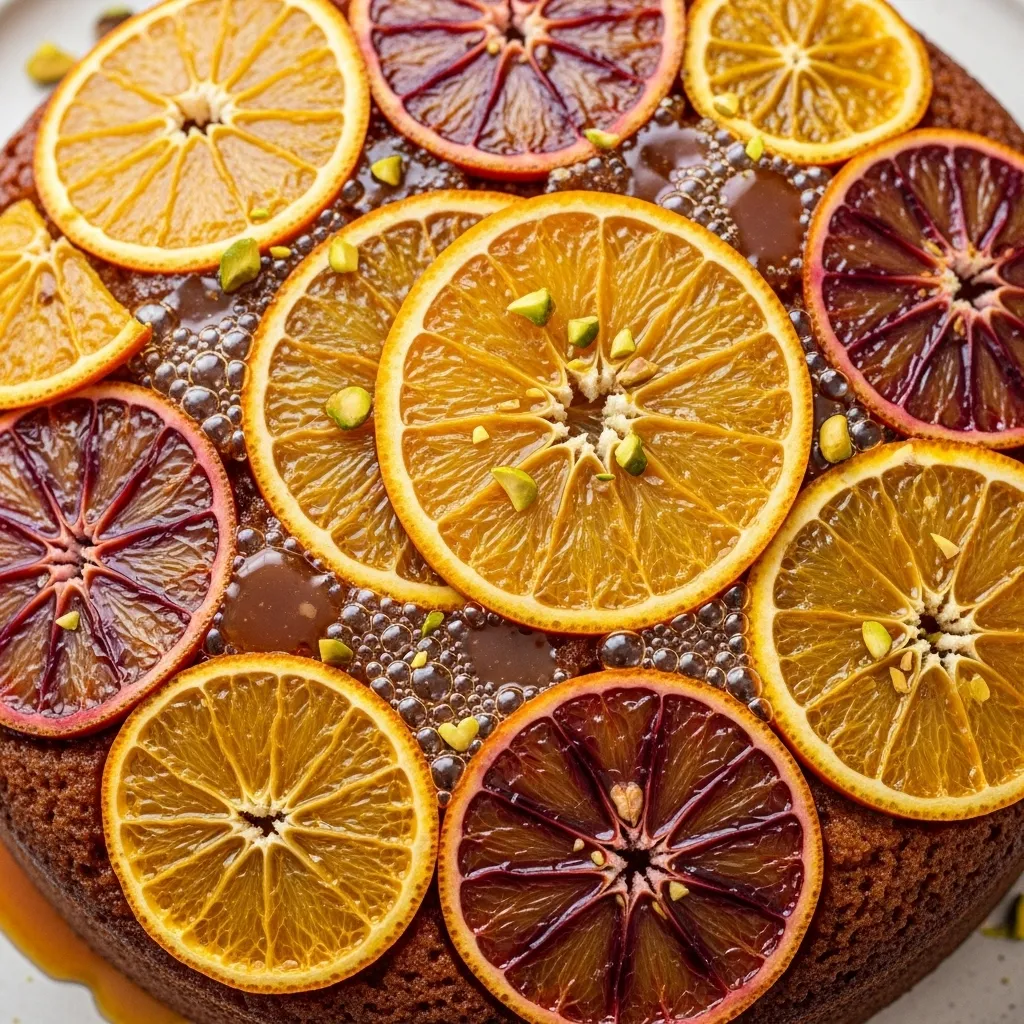
Thin-skinned oranges work best because they soften nicely during baking. Navel oranges are a popular choice because they’re sweet and easy to slice. Blood oranges add dramatic color if you want a visual upgrade. No matter the variety, slice them evenly so they cook at the same rate. Uneven slices can lead to uneven caramelization.
The Caramel Layer Explained
The caramel layer forms from butter and sugar melted together in the pan. As the cake bakes, the oranges release juice that mixes with the caramel, creating a syrupy topping. This layer flavors the entire cake as it cooks. Keeping the caramel simple works best. Too much sugar can overpower the orange flavor.
Simple Ingredients That Work Together
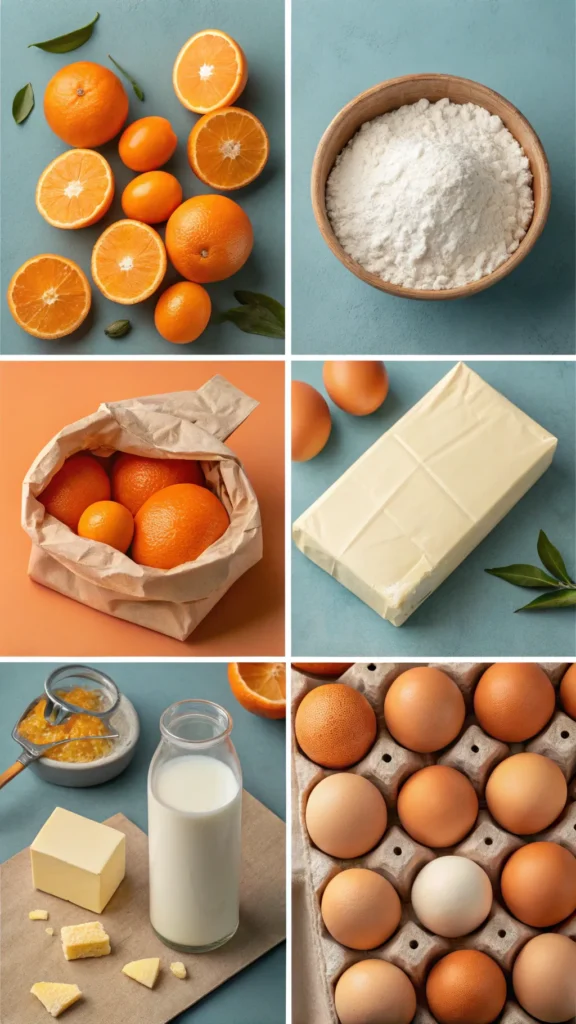
This cake doesn’t need a long ingredient list to shine. Balance matters more than quantity here. Every ingredient supports either texture or flavor. Key ingredients include:
- Fresh oranges for topping and flavor
- Butter and sugar for caramelization
- Flour and eggs for structure
- Milk or yogurt for moisture
- Orange zest for aroma
Instructions:How to Make
Mixing the Cake Batter
The batter should feel smooth and pourable, not thick. Creaming butter and sugar properly helps create a soft crumb. Adding orange zest to the sugar boosts aroma instantly. Once the dry ingredients go in, mix gently. Overmixing tightens the crumb and takes away softness.
Assembling the Cake in the Pan
Arrange orange slices neatly over the caramel layer. Overlapping slightly looks nice and prevents gaps. Pour the batter gently over the oranges so you don’t disturb the design. A quick tap of the pan helps level the batter before baking.
Baking Tips for Even Results
Bake at moderate heat so the caramel doesn’t burn before the cake sets. The top should look golden and feel firm when lightly pressed. The edges will pull slightly from the pan. Avoid opening the oven too early. That can cause sinking in the center.
The Flip That Matters Most
Let the cake cool briefly before flipping, usually about ten minutes. Too hot, and it may fall apart. Too cool, and the caramel can stick. Flip confidently in one smooth motion. Hesitation never helps here.
Common Mistakes to Avoid
Using too much sugar in the caramel can cause bitterness. Overbaking dries out the cake quickly. Cutting the cake before it sets can cause the topping to slide. Timing and balance make all the difference.
Storage and Freshness
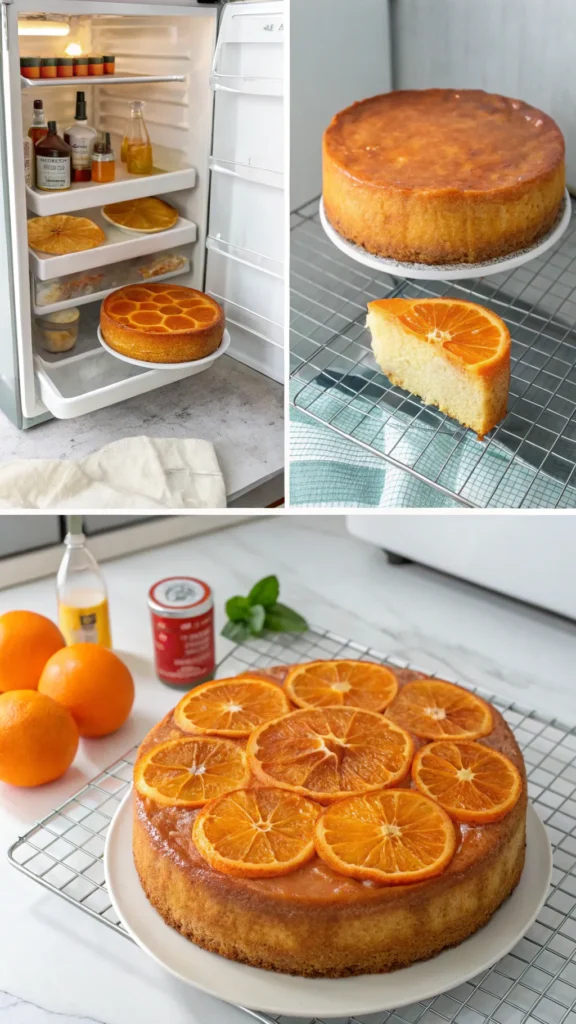
Store orange upside down cake in an airtight container at room temperature for up to two days. Refrigeration extends freshness but can firm up the texture. Let chilled slices come to room temperature before serving. The flavors actually deepen slightly after the first day.
Freezing Instructions
You can freeze the cake, but texture changes slightly. Wrap tightly and freeze for up to one month. Thaw at room temperature before serving. Freezing works best if you plan to rewarm slices gently before eating.
Easy Variations to Try
Add a pinch of cinnamon or cardamom to the caramel for warmth. Swap some oranges for mandarins for softer citrus notes. A splash of vanilla in the batter adds depth. Small tweaks keep the cake interesting without changing its identity.
Serving Ideas
Serve warm or at room temperature with whipped cream or yogurt. The cream balances the citrus and caramel beautifully. It works well as a casual dessert or a simple celebration cake. It’s one of those cakes that looks like effort, even when it wasn’t.
Conclusion
Orange upside down cake delivers flavor, texture, and visual appeal all in one. The caramelized oranges, soft crumb, and citrus aroma make it feel comforting and impressive at the same time. It’s simple, reliable, and always a crowd-pleaser. If you enjoy desserts that look stunning but stay easy to make, this cake absolutely earns a spot in your recipe rotation.