The Best Homemade Apple Pie Recipe
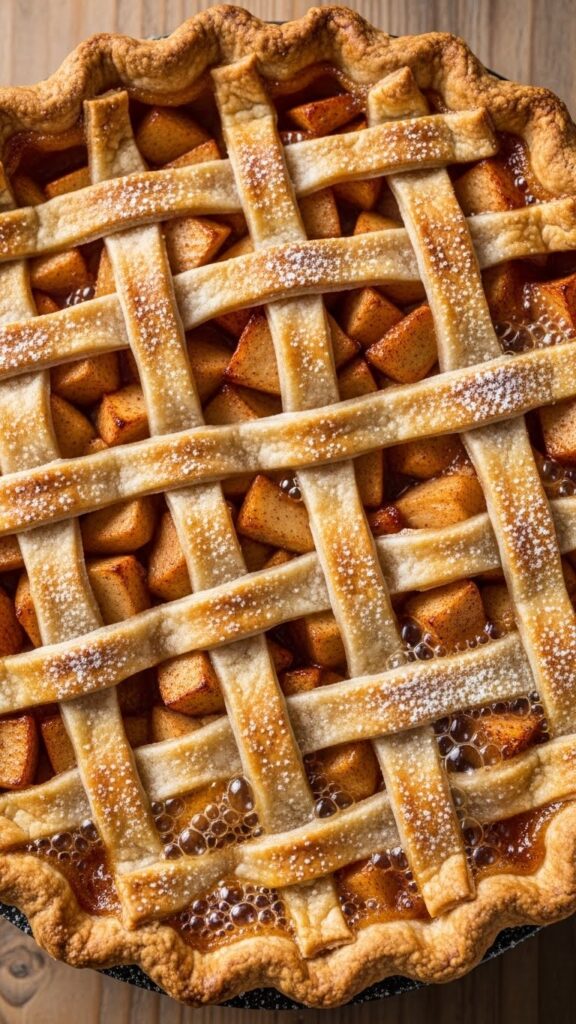
Deep dish apple pie doesn’t whisper comfort, it announces it loudly. This is the kind of pie that stands tall, overflows with apples, and makes regular apple pie look a little underdressed. I bake this when I want something that feels generous and satisfying, not thin or skimpy. Ever cut a pie and think, “That’s it?” Yeah, deep dish apple pie exists to solve that exact disappointment.
Why Deep Dish Apple Pie Is Worth the Extra Effort
Deep dish apple pie delivers more of everything that matters. You get thicker filling, deeper flavor, and a slice that holds its own on the plate. Every bite feels packed instead of hollow. That alone makes it worth the slightly longer bake time. IMO, it’s the kind of dessert that people remember. One slice feels complete, which somehow still leads to seconds. Funny how that works.
- Extra apple-packed filling
- Rich, layered texture
- Bigger, more satisfying slices
What Sets Deep Dish Apple Pie Apart
The pan makes the first big difference. A deeper dish allows apples to stack high instead of spreading thin. That extra depth changes how the pie bakes and how the filling sets. The crust also needs to be stronger to handle the weight. Because the filling is thicker, balance becomes critical. Too much juice turns it soupy, while too little makes it dry. Deep dish apple pie rewards attention, but not stress.
- Deeper pan means taller filling
- Longer baking time required
- Stronger crust is essential
Choosing Apples That Hold Their Shape
Not every apple can survive deep dish baking. You need varieties that stay firm and flavorful even after a long bake. Soft apples collapse too fast and ruin the structure. I always mix apples because one type alone never gives the best result. A blend keeps the filling interesting from top to bottom.
- Granny Smith for firmness and tartness
- Honeycrisp for sweetness and juiciness
- Braeburn or Fuji for balance
Ingredients That Support a Thicker Filling
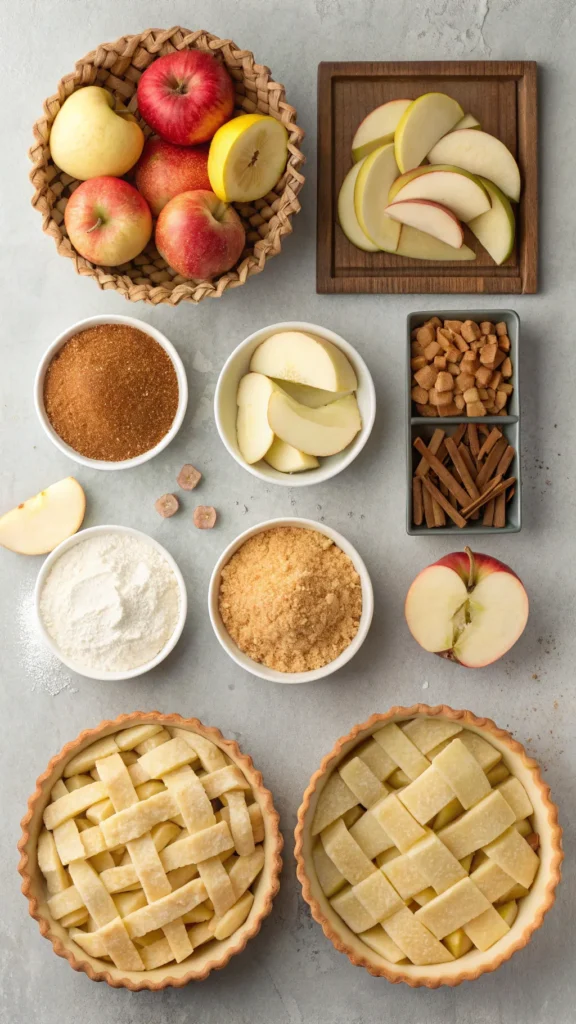
Deep dish apple pie uses simple ingredients, but the ratios matter more. The filling needs enough thickener to hold together without feeling gummy. Butter adds richness and helps round out the flavors. No complicated blends here. Pantry basics do the heavy lifting just fine.
- Fresh apples, peeled and sliced
- Granulated sugar and brown sugar
- Cinnamon and nutmeg
- Lemon juice
- Cornstarch or flour
- Unsalted butter
- Salt
- Double pie crust dough
Why the Crust Matters More Here
A deep dish pie puts serious pressure on the crust. It must support the filling without collapsing or turning soggy. Cold dough makes all the difference. Warm butter equals weak structure. I chill the dough before rolling and again after shaping. That extra step saves the pie later.
- Use a sturdy pie crust
- Keep dough cold at all times
- Chill crust before filling
Preparing the Apple Filling the Right Way
I slice the apples slightly thicker than usual so they don’t disappear during baking. Then I toss them gently with sugar, spices, lemon juice, and thickener. Overmixing bruises apples and releases too much juice. Letting the filling rest helps the thickener hydrate and the flavors blend. This step matters more with deep filling.
- Slice apples evenly
- Toss gently, not aggressively
- Let filling rest briefly
Balancing Sweetness in a Deep Pie
More apples mean stronger flavors, so sugar can get overwhelming fast. I keep sweetness moderate and let the apples shine. Tart varieties help prevent the pie from tasting flat. I always taste the filling before assembling. Adjusting early saves the whole pie later.
- Avoid excessive sugar
- Use tart apples for balance
- Taste before baking
Assembling the Pie Without Stress
I roll out the bottom crust and ease it into the pan without stretching. Stretching causes shrinkage under heat. Then I pile the apples high, slightly mounding them in the center. Apples collapse as they bake, so height matters. I dot butter evenly across the filling for richness.
- Ease crust gently into pan
- Fill generously and mound slightly
- Dot butter evenly
Choosing the Best Top Crust
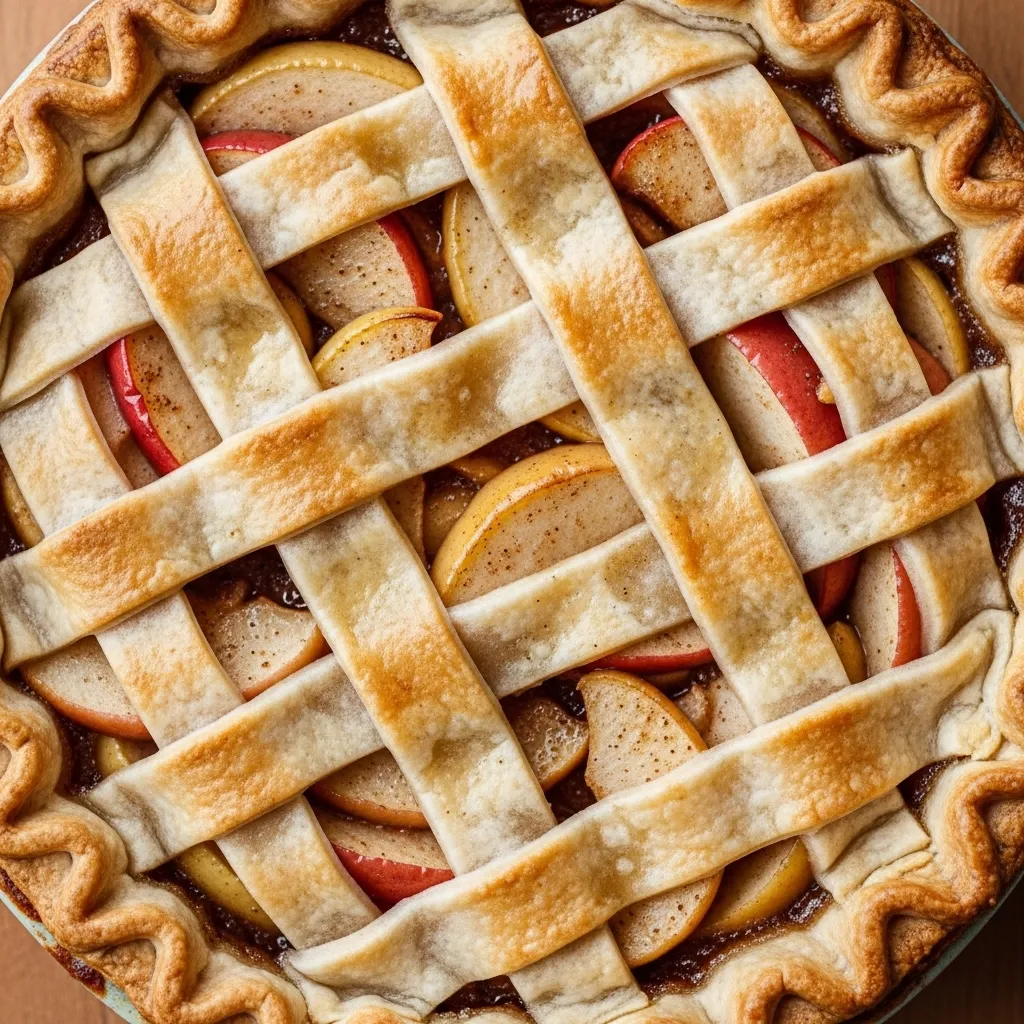
A full top crust works best for deep dish apple pie. It helps trap moisture and protects the filling. Steam vents prevent pressure buildup and leaks. Lattice looks nice, but full crust handles deep filling better. Function wins here.
- Full top crust preferred
- Cut proper steam vents
- Seal edges securely
Finishing Touches That Matter
I crimp the edges firmly to prevent leaks. Then I brush the top with egg wash for color and sprinkle sugar lightly for crunch. These details make the pie look bakery-worthy. Looks matter, especially when the pie is this tall.
- Crimp edges well
- Brush with egg wash
- Sprinkle sugar lightly
Baking Deep Dish Apple Pie Correctly
I start baking at a higher temperature to set the crust quickly. Then I lower the heat so the filling cooks through without burning the top. Covering the edges prevents over-browning. The pie finishes when thick juices bubble through the vents. That bubbling tells you the filling is ready.
- Start hot, then reduce heat
- Bake longer than standard pie
- Look for bubbling center
Cooling Time Is Not Optional
Deep dish apple pie needs extra cooling time. Cutting too early causes the filling to collapse. I wait at least three hours before slicing. Cooling lets the filling set and improves structure dramatically. Patience pays off here.
- Cool at least three hours
- Avoid refrigeration too early
- Slice cleanly after cooling
Texture and Flavor Expectations
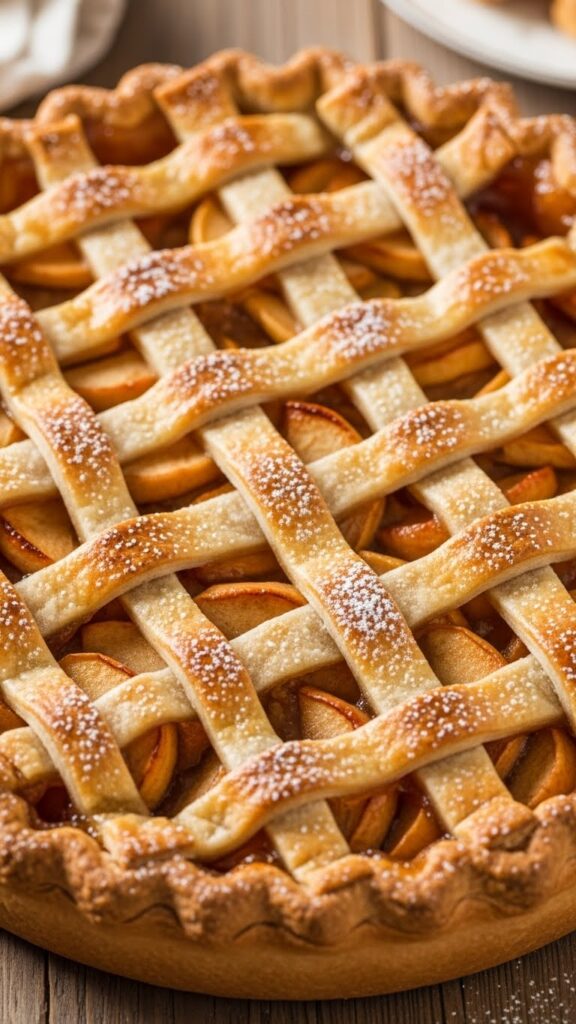
The filling should feel thick, cohesive, and packed with apples. Apples stay tender with slight bite. The crust stays flaky and supportive, not soggy. Every bite should taste warm, spiced, and comforting.
- Thick, structured filling
- Tender apples with bite
- Flaky, sturdy crust
Common Deep Dish Apple Pie Mistakes
Most issues come from underestimating the depth. Underbaking, weak crusts, or thin apple slices cause problems fast. Deep pies demand respect. I learned these lessons the messy way, so you don’t have to.
- Underbaking the filling
- Using soft apple varieties
- Skipping proper chilling
Storage and Reheating Tips
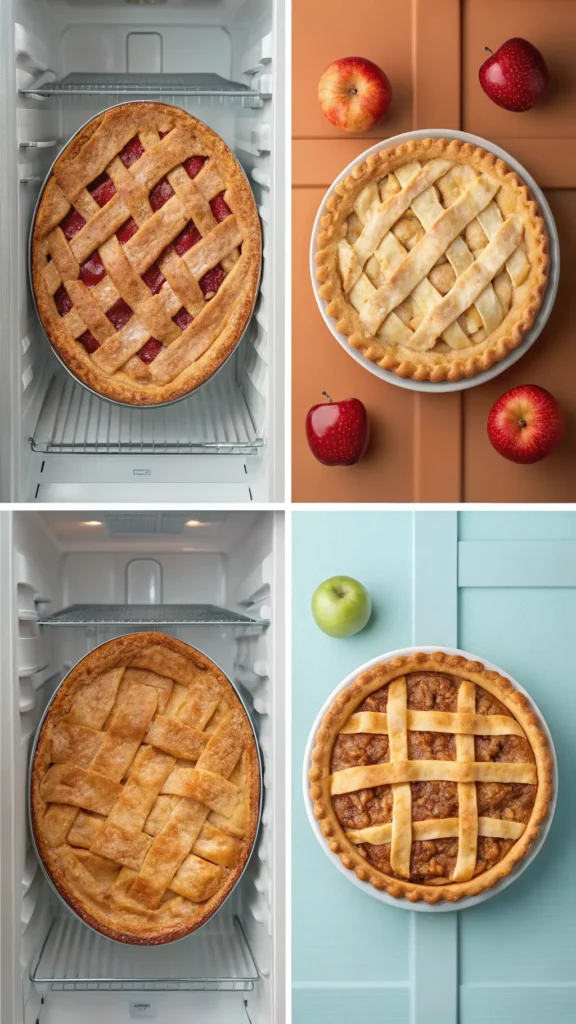
Deep dish apple pie stores well when handled correctly. I keep it loosely covered at room temperature for one day. Refrigeration works for longer storage. Reheating slices gently restores texture and flavor. Warm pie always wins 🙂
- Store at room temperature short-term
- Refrigerate after one day
- Reheat slices gently
Who Deep Dish Apple Pie Is Perfect For
This pie fits gatherings where dessert matters. Holidays, family dinners, and apple pie lovers appreciate its generosity. It feels indulgent without being excessive. If you want a pie that actually feels worth the effort, this is it.
- Holiday tables
- Family gatherings
- Serious apple pie fans
Conclusion
Deep dish apple pie is for people who want their dessert to feel generous, comforting, and completely worth the effort. The tall layers of apples, the sturdy flaky crust, and the rich spiced filling all work together to create something memorable. Every slice feels intentional, not rushed or skimpy, and that alone sets it apart. If classic apple pie feels a little too polite for your taste, this version speaks your language. Bake it when you want reactions, full plates, and quiet moments at the table where everyone is too busy enjoying dessert to talk.